When it comes to real estate, what matters is not always whose name is on the title. Sometimes, the real question is who actually controls the property in everyday life.
Another question inevitably follows: who truly owns the land of a city — its residents, the government, or powerful developers? Court cases from around the world show that real estate sits at the intersection of competing interests and power, where even seemingly ordinary disputes can escalate all the way to international courts.
This article explores some of the world’s strangest real estate disputes, cases that ultimately went far beyond the parties involved and led to broader legal and regulatory changes.
The Haunted House
Stambovsky v. Ackley is one of the most famous property disputes taught in American law schools and frequently cited in legal textbooks.
How would you react if you had already paid part of the purchase price for a home, only to discover that it was supposedly haunted?
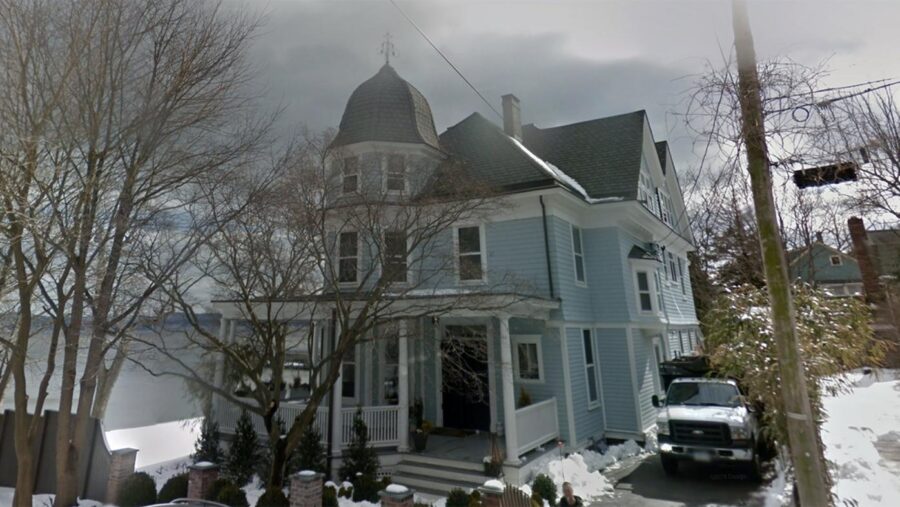
That is exactly what happened in the village of Nyack. Helen Ackley lived with her family in a three-story Victorian house and publicly claimed that ghosts inhabited the property. She wrote several articles for local newspapers describing the paranormal experiences inside the home. According to Ackley, a “friendly ghost” would wake her daughter up for school in the mornings, leave behind coins as gifts, and even help choose paint colors during renovations. The house eventually became a local curiosity that attracted visitors.
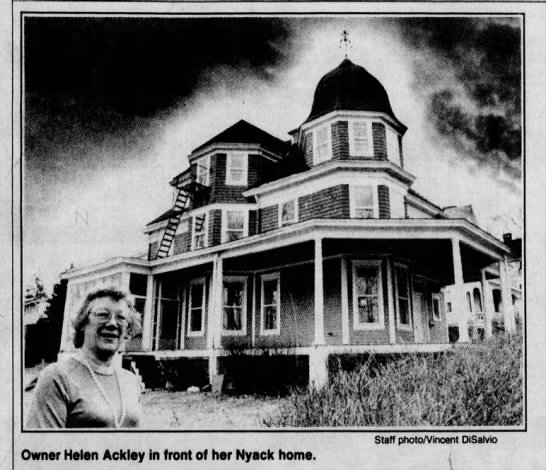
In 1989, Ackley decided to sell the property and hired the brokerage firm Ellis Realty. A buyer soon appeared — Jeffrey Stambovsky from New York City. He paid a $32,500 down payment toward the agreed $650,000 purchase price. But roughly a week after signing the contract, Stambovsky claimed he had learned about the house’s haunted reputation and refused to complete the transaction.
The dispute ended up in court. Both the homeowner and the brokerage insisted that the buyer had been informed about the ghosts from the beginning and had even joked about the matter. Stambovsky, however, maintained that he knew nothing about the haunting.
Initially, the court sided with the seller, reasoning that the buyer had a responsibility to investigate the condition of the property before purchasing it. Stambovsky appealed and won.
The appellate judge ruled in his favor on fairness grounds, noting that Ackley herself had publicly promoted the house as haunted in newspaper stories while failing to disclose that reputation during the sale process. The court also recognized that curious visitors could continue showing up at the property in the future, affecting both the buyer’s privacy and the home’s market value. In the end, Ackley returned Stambovsky’s money.
The case became a major precedent in American real estate law and influenced later disclosure practices, prompting states to more clearly define what sellers must disclose to buyers before a home sale.
As for the house itself, it was eventually sold in 1991. Over the years, it passed through several owners, including celebrities, although no one publicly discussed ghosts anymore. The property last sold in 2021 for $1.795 million.
Adverse Possession
In most legal systems, property owners can reclaim their land by removing squatters. But in some countries, the situation is more complicated.
In the United Kingdom, for example, a person who occupied someone else’s land or home for an extended period while the owner took no action could potentially acquire legal ownership through a doctrine known as adverse possession.
One of the best-known cases involving this principle was JA Pye (Oxford) Ltd v Graham, which eventually reached the European Court of Human Rights.
In England, the company JA Pye (Oxford) owned a large parcel of land. In 1982, the Graham family purchased a nearby farmhouse and leased adjacent land from the company. At first, they used the property legally under a grazing agreement. But after the lease expired, the owner refused to renew it, claiming the land might later be developed for another purpose. Although the Grahams were asked to leave, the owner ultimately took no meaningful action.
For years, the Graham family continued farming and controlling the land, eventually fencing it off as well. They repeatedly tried to negotiate a new agreement with the owner, without success. After 12 years, the Grahams sought legal ownership of the land, while the company sued to recover it.
Ultimately, the courts ruled that the Grahams had acquired the land through adverse possession. Judges found that they had exercised continuous control over the property and treated it as their own. An appellate court initially overturned the ruling, but the dispute eventually reached Britain’s highest court, which restored the Grahams’ ownership rights.
The case later moved to the European Court of Human Rights. JA Pye (Oxford) argued that losing the land violated one of the core protections of the European Convention on Human Rights — the right to peaceful enjoyment of property. But the Strasbourg court ultimately upheld the British ruling.
Following this and similar disputes, the UK introduced major reforms through the Land Registration Act 2002. Under the updated rules, anyone seeking ownership through adverse possession must formally apply for registration, and the original owner is automatically notified and given time to respond before losing the property.
Holdout Property
Many people are familiar with Up, Pixar’s famous animated movie about an elderly man who refuses to leave his small home as skyscrapers and construction projects rise around him.

Real life has produced similar stories. During Manhattan’s rapid commercial expansion, there were numerous cases where homeowners refused to sell their properties while developers bought up entire city blocks.
Developers responded by secretly assembling land through intermediaries so owners would not know who the real buyer was. In some cases, property owners were offered enormous sums of money. Yet small, sometimes nearly abandoned buildings still remained wedged between massive skyscrapers, becoming symbols of one individual standing against corporate power. One of the most famous examples is the home of Edith Macefield.
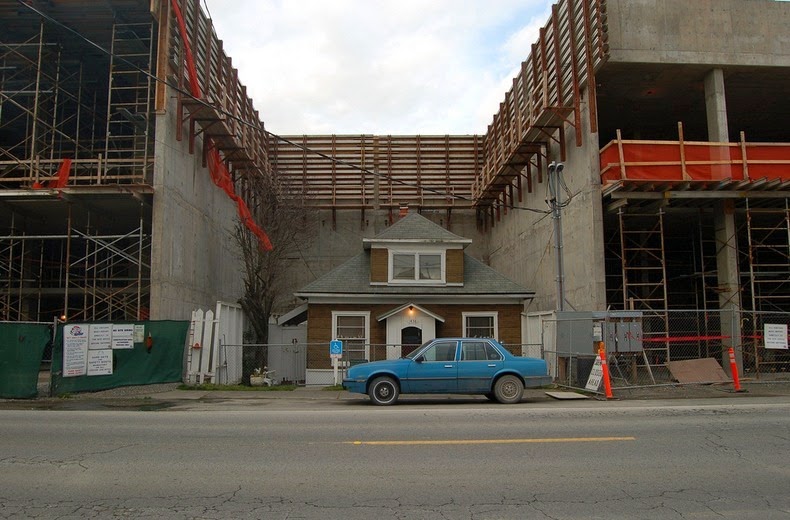
In real estate, this phenomenon is known as a “holdout property,” when one or several owners refuse to sell land needed for a major development or infrastructure project. Governments, however, can use eminent domain — the legal power to forcibly acquire private property for public purposes in exchange for compensation.
But what happens when a city wants to transfer land to a private developer for commercial construction?
That question became central in one of the most controversial cases in U.S. Supreme Court history: Kelo v. City of New London.
Susette Kelo bought her home in New London in 1997. In 2000, city officials approved a major redevelopment project for the area. About 115 residents lived there. Most agreed to sell their homes, but nine owners, including Kelo refused.
Generally, American law does not require a homeowner to sell simply because most neighbors agree to do so, and private property rights are strongly protected under the U.S. Constitution.
Still, the city invoked eminent domain. Residents sued to block the seizures, raising a critical legal question: does economic development qualify as a “public use”?
In 2004, local courts ruled in favor of the city, and Kelo appealed to the Supreme Court of the United States in 2005. The Supreme Court again sided with the government, ruling that private property could be taken for economic development projects if they served a broader public purpose.
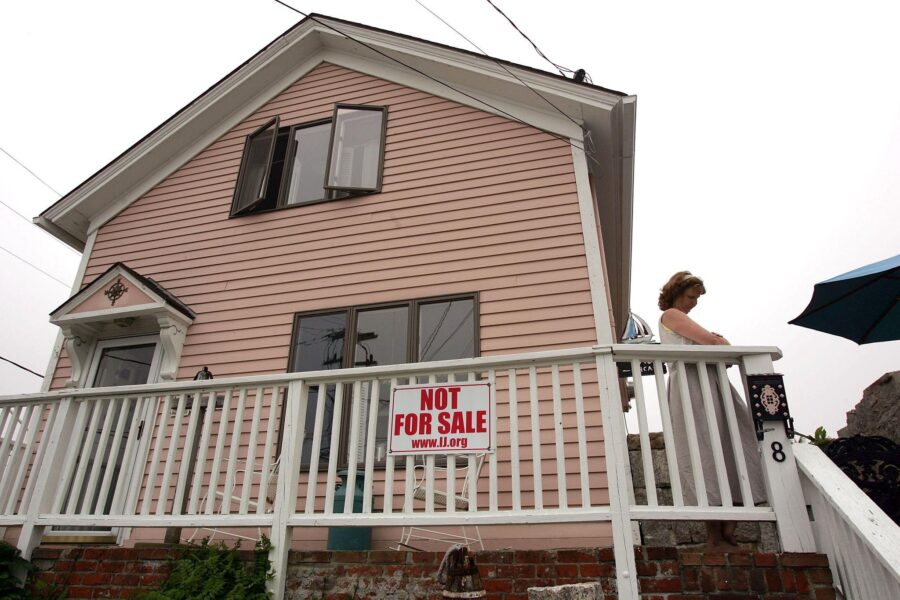
The decision sparked fierce backlash across the United States because it suggested that the government could seize someone’s home and ultimately transfer the land to a private company.
Although Susette Kelo lost her case, the controversy surrounding the ruling led many U.S. states to pass stricter limits on eminent domain. As a result, governments now face greater legal obstacles when attempting to seize private property for redevelopment projects, while property owners gained stronger protections.
Main Image: AI generated.
Author: Lika Kasradze
If you are considering investing in real estate in Georgia, Kedaro Group is ready to provide you with professional guidance.
Contact us:
– Email: kedarogroup@gmail.com
– Phone: +995 593 618 181
– Address: 18/22 G. Atoneli Street, 0105 Tbilisi, Georgia