With the advancement of innovative technologies, scenarios that once seemed unimaginable are rapidly becoming reality. One such development is tokenization – the digital conversion of real estate assets and their integration into a blockchain system, where ownership is represented through shareholders.
To illustrate this concept in simple terms, imagine the following scenario: you own an apartment that is digitally “divided” into numerous small units. These units are known as “tokens” and can be individually purchased. While acquiring a commercial building in central Tbilisi through traditional means requires substantial capital, tokenization enables investors to acquire a fractional share of the same property. This approach is particularly attractive for individuals who lack the financial capacity to purchase an entire property outright.
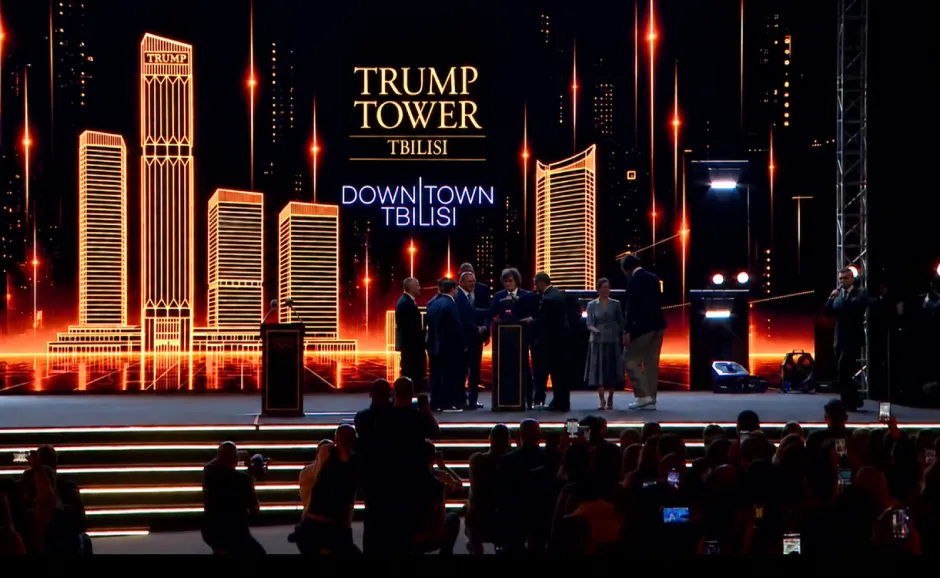
In this sense, real estate tokenization represents a relatively new and innovative investment model. It involves the creation of digital tokens within a blockchain system, each representing a share in a property. If this concept seems like a distant future, that perception is misleading. Only recently, plans were announced to introduce tokenization into Georgia’s real estate sector, with the government initiating cooperation with a relevant private company.
Naturally, for those unfamiliar with the topic, tokenization and the digital division of ownership may initially appear complex. However, there is no need to be overwhelmed by technical terminology. In this article, step by step, using accessible language and clear examples, we explain what real estate tokenization is, assess its advantages and risks, and explore why it may become an appealing alternative form of real estate investment.
What Is Real Estate Tokenization?
To begin, it is essential to define tokenization. In broad terms, tokenization refers to the process of “dividing” real-world assets and representing them as digital units on a blockchain. More precisely, physical assets are converted into digital tokens. In the context of real estate, tokenization means that a tangible property – such as an apartment or a plot of land- is digitally divided, allowing multiple investors to participate in its ownership.
Consider a simple example: suppose an apartment is valued at USD 100,000. It is divided into 1,000 tokens, each priced at USD 100. An investor does not need to purchase the entire apartment; instead, they may acquire, for example, 10 tokens, corresponding to an investment of USD 1,000. This represents ownership of 1% of the property. If the apartment is rented out, rental income is distributed proportionally based on the number of tokens held. If the market value of the apartment increases, the value of each token rises accordingly. In effect, investing in real estate becomes similar to investing in shares—except that the underlying asset is physical property.
Where and How Does This Process Take Place?
The tokenization process is based on blockchain technology. All transactions and ownership records are stored in a distributed, decentralized ledger. These records are immutable and transparent, significantly reducing the risk of falsification or fraudulent manipulation. For example, if an investor owns a token representing 0.5% of a warehouse, this ownership interest is recorded on the blockchain and cannot be altered without the investor’s consent.
In the state registry (implemented on blockchain infrastructure), the record may state: “Apartment No. 10 belongs to Company X.” Meanwhile, the tokenization platform specifies that “Company X’s apartment is divided into 1,000 tokens.” Investors – including foreign investors – purchase these tokens and receive income or capital gains, while the official registry continues to list Company X as the legal owner, rather than thousands of individual investors. Registering thousands of co-owners would be legally impractical. Tokenization resolves this issue at the “economic”, rather than the “legal”, level. The state blockchain safeguards ownership rights and provides a legal foundation, while tokenization facilitates investment and the distribution of economic benefits.
Importantly, the state cannot tokenize property without the consent of the owner. However, it can establish the necessary infrastructure, legal framework, technical platforms, security standards, and regulatory mechanisms. The state may also define who is permitted to tokenize assets, how investors are protected, and how tokenization interfaces with public registries. In addition, tokenization can be applied to state-owned assets, such as public land, government buildings, or state development projects.
The Origins of Tokenization
The concept of real estate tokenization is closely linked to the emergence of cryptocurrencies and blockchain technology. It gained prominence in the 2010s, particularly with the rise of platforms such as Ethereum, which enabled the creation of tokens through smart contracts. One of the earliest and most frequently cited examples of real-world asset tokenization occurred in the United States in 2018, when the owners of the St. Regis Aspen Resort in Colorado tokenized the property and offered it to investors in digital form.
According to the project’s developers, the initiative was intended to establish a practical model for real estate tokenization. The Aspen example demonstrated that even several years ago, it was already feasible to convert high-value real estate into a digital asset and offer fractional ownership through blockchain technology. Since 2017, numerous projects have followed, involving not only hotels but also residential buildings, commercial spaces, and other types of property. Today, real estate tokenization is evolving into a global trend adopted across multiple jurisdictions.
Tokenization in Georgia
Recently, a memorandum of cooperation was signed between PRYPCO and the Government of Georgia to promote the introduction of innovative technologies in the real estate sector. According to the Administration of the Government of Georgia, the initiative aims to stimulate investment and, in compliance with Georgian legislation, establish a secure and transparent tokenization framework for private property rights. Under the memorandum, the parties will collaborate on legal and technological matters, assess the development potential of real estate tokenization in Georgia, and evaluate its compatibility with existing public service systems.
It is worth noting that Georgia has utilized blockchain technology in real estate registration since 2017, positioning the country among the pioneers in this field. Furthermore, in December 2025, the Ministry of Justice of Georgia signed a memorandum with Hedera, one of the leading blockchain platforms, to introduce advanced digital technologies into the public sector.
As a result, real estate tokenization could represent a new phase in attracting investment to Georgia. Should registration records be fully transferred to blockchain and corresponding legislative amendments adopted, Georgian developers may, in the future, offer apartments in new residential developments in Tbilisi to both domestic and international investors in tokenized form, alongside traditional sales models.
Representatives of the company White Square emphasize the importance of real estate digitalization. According to Irakli Burdiladze, the company’s managing partner, tokenization has the potential to generate significant benefits not only for developers but also for investors and buyers. In his view, tokenization enables developers to optimize financial flows and improve capital management.
What Are the Advantages of Tokenization?
Lower investment barriers — Traditional real estate investments require substantial capital, whereas tokenization allows investors to purchase fractional shares of a property. As a result, investment opportunities become accessible to a broader audience, increasing the number of participants and the volume of capital in the market.
Increased liquidity — Conventional real estate transactions are often slow and inflexible. In contrast, tokens can be traded more quickly, allowing investors to exit their positions without selling the entire asset.
Greater trust and transparency — Tokenization, particularly when supported by state institutions, enhances transparency through digital platforms, reduces risks, and simplifies verification procedures.
Improved access for foreign investors — Foreign investors are frequently deterred by bureaucratic complexity, legal uncertainty, and concerns about control. Tokenization simplifies participation by offering a familiar financial instrument and reducing administrative barriers.
Risks and Drawbacks
Despite its growing popularity, tokenization involves several significant risks that investors and regulators must carefully consider:
Legal uncertainty (the most significant risk) — In many jurisdictions, tokenization is not yet fully regulated. The legal status of tokens in dispute resolution remains unclear, potentially leaving investors with rights that are difficult to enforce.
Tokens do not represent legal ownership — A token typically signifies an economic interest or contractual right to income rather than direct ownership. The official registry must still identify at least one legal owner. Failure to clearly communicate this distinction may lead to disputes.
The illusion of liquidity — Although tokens are theoretically easy to trade, in practice liquidity depends on market demand. Without active buyers or sufficient trust, tokens may become illiquid.
Technological risks — Tokenization relies entirely on technological infrastructure. Platform insolvency, cyberattacks, technical malfunctions, or data loss may result in temporary or permanent loss of access for investors.
The emergence of new intermediaries — While tokenization often claims to eliminate intermediaries, new ones may appear, including platform operators and technology providers.
Price volatility and speculation — Tokens may become speculative instruments driven by market sentiment or hype rather than the underlying value of the real estate asset.
Risk to the state — Rapid or poorly regulated implementation may undermine confidence in the real estate market and damage its overall reputation.
Conclusion
Real estate tokenization represents a modern technological transformation that is gradually reshaping the real estate market both globally and in Georgia. The concept has progressed beyond experimentation and entered the stage of practical implementation. Georgia is actively aligning with this global trend, as demonstrated by governmental memorandums with Hedera and PRYPCO, signaling the country’s readiness to adopt innovative solutions in real estate development.
Nevertheless, any significant transformation entails challenges. The successful implementation of tokenization requires a careful balance between innovation and risk management, supported by effective regulation, robust technological systems, and public awareness.
Although tokenization may still be unfamiliar to many, history offers a useful comparison: just as the internet revolutionized communication and mobile banking transformed finance, blockchain and tokenization may soon become standard components of the real estate sector. Individuals and companies that understand and prepare for this shift are likely to benefit—from expanded investment opportunities to new and more flexible business models.
Author: Lika Kasradze
If you are considering investing in real estate in Georgia, Kedaro Group is ready to provide you with professional guidance.
Contact us:
- Email: kedarogroup@gmail.com
- Phone: +995 593 618 181
- Address: 18/22 G. Atoneli Street, 0105 Tbilisi, Georgia