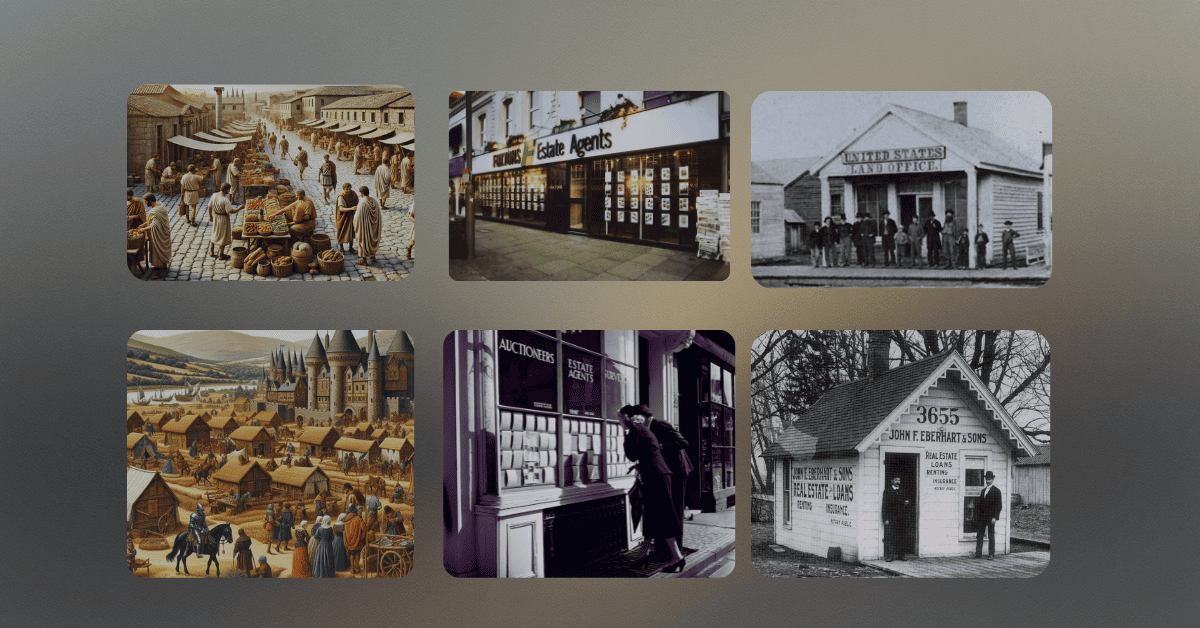
Real estate management is far from a simple activity. Over the centuries, it has accumulated experience, evolved, and taken on increasingly complex forms.
Those working in this field—individuals to whom society entrusts its savings, plans, shelter, future, hopes, and financial security—must possess multifaceted knowledge, practical experience, caution, responsibility, and foresight.
This complexity has been correctly assessed in countries where property rights are fundamentally protected. As a result, these states have deliberately pursued regulation aimed at reducing risks. Below, the examples of the United States, Germany, France, and the United Kingdom are examined, illustrating three principal regulatory models:
(a) a system in which the state requires mandatory licensing of agents, complemented by strong self-regulation mechanisms;
(b) a system where registration and the acquisition of a license are prerequisites for entering the profession;
(c) a model in which professional activity may begin without a license, but where the state provides such robust protection of client rights that agents are effectively compelled to operate strictly within the law.
Which of these models functions in Georgia? None.
Before turning directly to the forms of regulation, it is important to review the processes through which the profession of the real estate agent was formed and to understand how the world ultimately arrived at the need to regulate this field.
History
The concept of intermediaries in real estate transactions has existed for millennia. Early evidence can be found in records from Ancient Rome, Greece, and Mesopotamia. In ancient Mesopotamia and Egypt (approximately 2000 BCE), clay tablets document land transfers, witnesses, fees, and intermediary services. While these figures were not “agents” in the modern sense, individuals facilitating transactions were already clearly identifiable.
In Ancient Greece, particularly in Athens, land transfers were conducted through public records and witnesses, while informal intermediaries assisted foreign buyers who lacked local legal status. In Ancient Rome, private property law, written contracts, and specialized intermediaries were already well established.
In medieval Europe, estate managers and stewards oversaw the properties of wealthy landowners, collected rents, and maintained records—activities that effectively laid the groundwork for the future profession.
By the late eighteenth century, “house agents,” “land agents,” and auctioneers were operating on a regular basis, acting on behalf of others in exchange for commission. At the same time, complaints concerning fraud, misinformation, and conflicts of interest became increasingly frequent. This marked the first critical turning point at which society began to ask a fundamental question: who controls the intermediaries entrusted with managing people’s property and money?
In England during the eighteenth and nineteenth centuries, the predecessors of modern agents were “property agents” who managed estates and assisted aristocrats with land sales. One of the earliest newspaper advertisements for real estate agency services was published by Chestertons in The London Courier in 1807.
The profession as we know it today emerged as a result of the Industrial Revolution and subsequent urbanization, when demand for housing and professional intermediaries sharply increased. Real estate agency became a professionalized field in the late nineteenth and early twentieth centuries.
A decisive milestone was reached in 1908 in the United States with the establishment of the National Association of Real Estate Exchanges (later renamed the National Association of Realtors, or NAR). The organization’s objective was to standardize the profession and introduce a code of ethics, thereby formalizing professional practice. In 1913, it adopted the first Code of Ethics, aimed at enhancing the profession’s public image. The code emphasized client protection, professional competence, and collegiality, while explicitly condemning fraudulent practices.
From 1919 onward, the United States began widely introducing formal licensing requirements, leaving behind the “Wild West” era in which virtually anyone could assume the role of a broker. Between 1910 and 1930, ethics codes spread across U.S. cities, and the title of Realtor became a protected professional designation, with membership contingent upon adherence to ethical standards.
Nevertheless, ethics without enforcement proved insufficient. Consumers continued to face financial harm, and courts required clearer standards of professional accountability. Consequently, between the 1920s and 1950s, licensing laws took shape across the states. Mandatory licensing was introduced, including requirements such as examinations, minimum education, and legal accountability. Ethical standards continued to be enforced by professional associations. As a result, the United States developed a dual system: state law combined with professional ethics.
Alternative Regulatory Models
Other regulatory systems governing real estate agents provide further insight.
In France, real estate activity has been regulated since 1970 under the Loi Hoguet, which establishes a legal framework for agents, property managers, and related transactions. The law requires agents to obtain a mandatory professional license (carte professionnelle), maintain professional insurance, and meet specific educational or experience criteria. Agents may not sell property without a formal written mandate (mandat de vente or mandat de recherche), clearly defining the scope of services, fees, and actions. Agency commissions must be transparently disclosed. Moreover, agents are required to complete ongoing professional training (for example, 14 hours annually) to maintain their license.
In Germany, to operate legally, real estate brokers generally must register their business with local authorities, obtain the relevant license or permit from supervisory bodies, meet capital requirements, and comply with ongoing reporting and conduct standards. Operating without authorization can result in significant legal consequences. The legal provisions governing brokerage activity are embedded in the civil law framework.
The United Kingdom follows a different approach. Entry into the profession does not require licensing; however, harm to clients is punished severely. The Estate Agents Act 1979 regulates agent conduct and the handling of client finances. Consumer protection regulations against unfair trading practices prohibit misleading actions and require transparency regarding price, ownership terms, and associated fees. The British model pushes agents toward higher standards of transparency, competence, and ethical conduct, even in the absence of mandatory licensing.
Georgia
Against this background, what is happening in Georgia, where neither the state nor strong self-regulatory mechanisms govern the activities of real estate agents? Put plainly, the market relies on internal company standards and individual good faith. The Georgian National Association of Real Estate (GNARE) was established in 2014, and training courses for Realtors exist, but participation remains voluntary. Most individuals in the sector operate independently, often violating basic professional norms—sometimes without even realizing it. The result is an uncontrolled market in which both consumers and conscientious agents suffer. Kedaro Group has been advocating for the regulation of this sector for years.
The history of this profession clearly demonstrates that regulation did not arise artificially, arbitrarily, or under political pressure. It emerged as a direct response to market failures, consumer harm, fraud, conflicts of interest, and systemic mistrust. Leading countries around the world reached this conclusion long ago. The logic is consistent: where large financial assets are involved, chaos is destructive.
Yet Georgia remains outside this global consensus. Despite a rapidly growing market and increasing foreign investment, the profession of the real estate agent remains unprotected. Entry into the field is virtually unrestricted; professional education is optional; ethical standards are fragmented and voluntary; and consumers rely on personal trust rather than institutional safeguards. In practice, this means that risk is universal—for buyers, sellers, conscientious agents, and the market as a whole.
Every developed market eventually recognizes that growth without regulation leads to instability, reputational damage, and the erosion of public trust. Professional regulation does not restrict the market; it protects it from unfair competition, safeguards consumers, and shields the state from systemic risk. Codes of ethics, licensing, registries, and enforcement mechanisms are not bureaucratic burdens. On the contrary, they are the essential instruments of trust upon which modern real estate markets function.
The developed world has already made its choice. Georgia’s real estate sector now faces a clear question: continue to ignore this reality, or awaken and finally align with proven global standards.
Author: Lika Kasradze
If you are considering investing in real estate in Georgia, Kedaro Group is ready to provide you with professional guidance.
Contact us:
- Email: kedarogroup@gmail.com
- Phone: +995 593 618 181
- Address: 18/22 G. Atoneli Street, 0105 Tbilisi, Georgia